Why JWT-Based Systems Fail Silently Under Scale
JWTs rarely cause outages. They show up as latency creep, refresh storms, claims bloat and clock-skew 401s, with production numbers for each.
 Dhananjay Aggarwal, · 6 min read
JWTs are one of the most popular authentication mechanisms in distributed systems. They promise statelessness, horizontal scalability and simple verification across services.
And that is exactly why they quietly damage systems under real production load.
JWT failures rarely show up as outages. They surface as latency creep, CPU pressure, random authentication errors and slow SLO erosion. Teams keep scaling infra without realizing the authentication layer is the hidden tax.
This article breaks down why JWT-based systems fail silently at scale, with real production metrics, and how mature teams design around these issues.
1. Stateless Does Not Mean Free#
JWTs are stateless only in terms of storage. They are not computationally free.
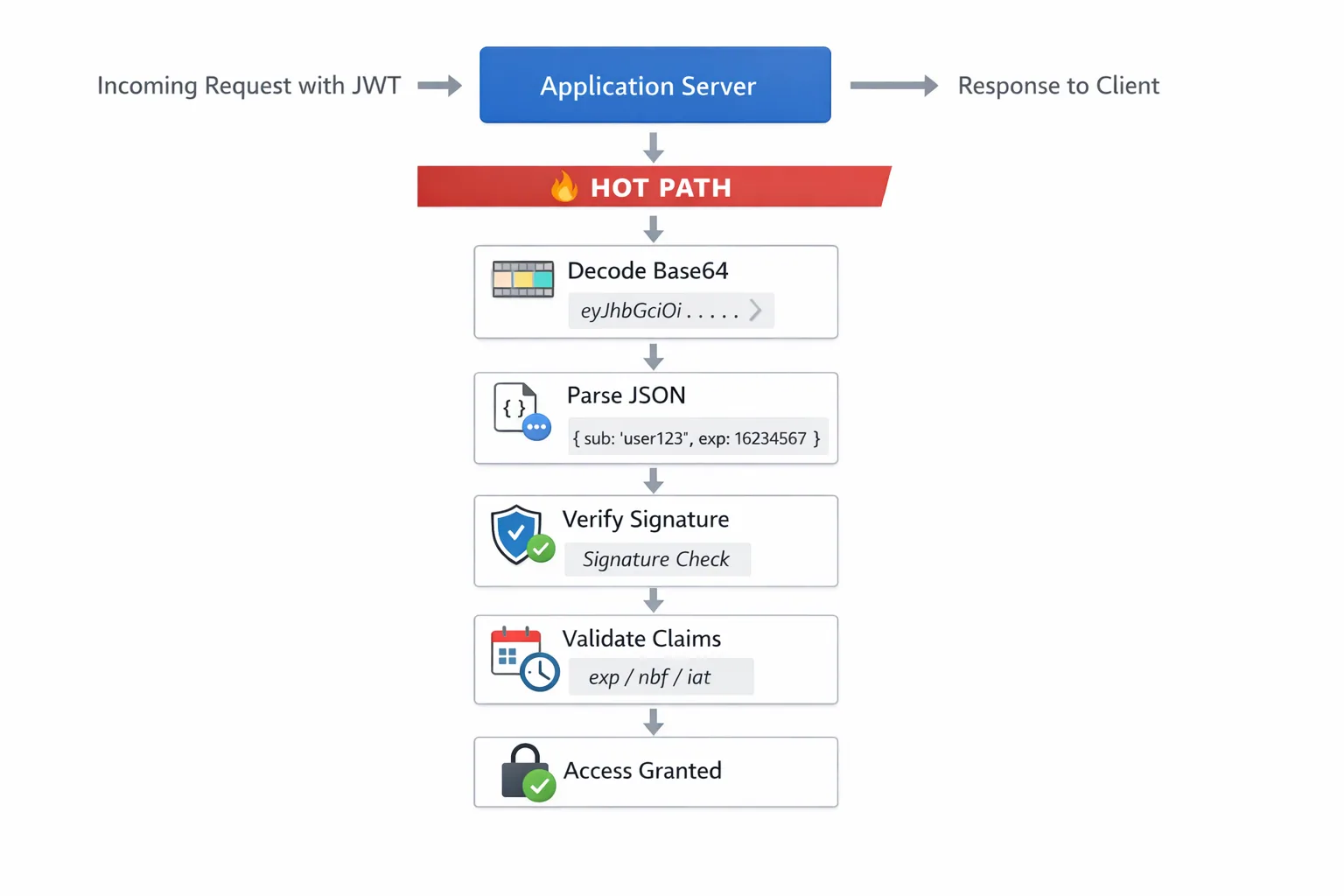
Every authenticated request performs:
- Base64 decoding
- JSON parsing
- Signature verification (HMAC or RSA)
- Claim validation
- Clock checks (exp, nbf, iat)
This work runs on the critical request path.
What This Looks Like in Production#
A real example from a high-traffic backend service:
- Traffic: ~65k RPS
- JWT verification cost: ~120–180 microseconds per request
- CPU usage up by 22 percent after enabling JWT auth
- p99 latency up from 180 ms → 260 ms
- No error rate spike
- No alerts fired
Nothing broke. Everything just got slower.
This is why JWT issues often trigger autoscaling instead of investigation. Teams add more pods, costs rise, and latency still creeps.
2. Logout Is a Lie at Scale#
JWTs cannot be revoked without introducing state.
When a user logs out:
- The token remains valid
- All services still trust it
- Compromised tokens live until expiry
At small scale, this is acceptable. At large scale, it becomes a silent security failure mode.
Production Reality#
In one incident postmortem:
- A leaked JWT had a 24-hour TTL
- The token accessed 12 internal services
- No alert triggered because auth succeeded
- The breach window lasted the full TTL
JWTs trade revocation for simplicity. That trade becomes dangerous as the system grows.
3. Token Expiry Storms Are Real#
JWT expirations are often synchronized.
If millions of users authenticate around the same time, millions of tokens expire together.
What happens next:
- Clients refresh simultaneously
- The auth service receives a burst of refresh requests
- Cache misses amplify load
- Retries create feedback loops
Real Metrics Snapshot#
- Normal auth refresh traffic: ~4k RPS
- During the expiry window: 42k RPS
- CPU saturation on the auth service
- Redis latency spiked from 2 ms → 40 ms
- Login success rate dropped to 96 percent
No outage. Just a degraded user experience.
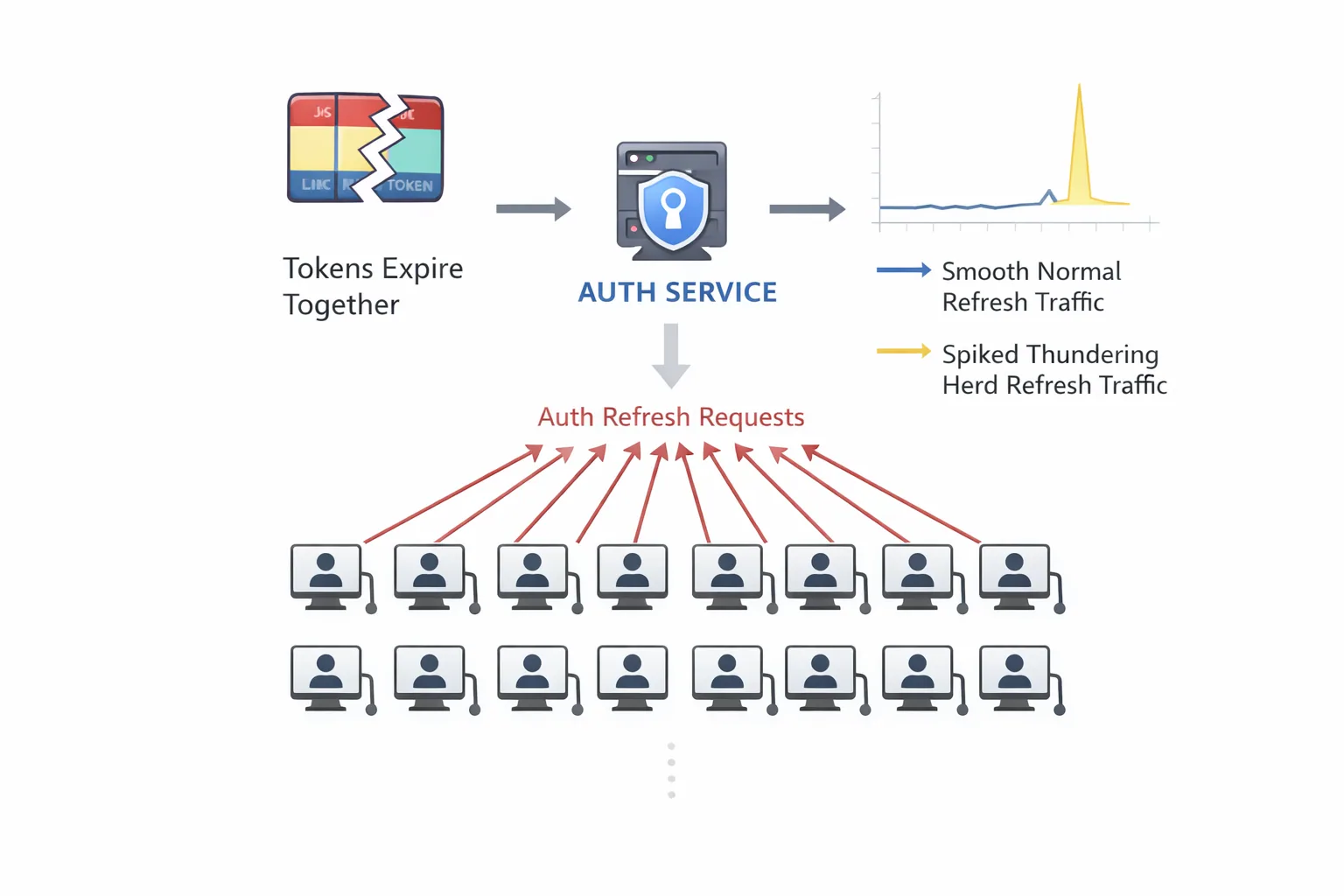
This is not a capacity problem. It is a coordination problem.
4. Claims Bloat Has a Hidden Cost#
JWTs start minimal.
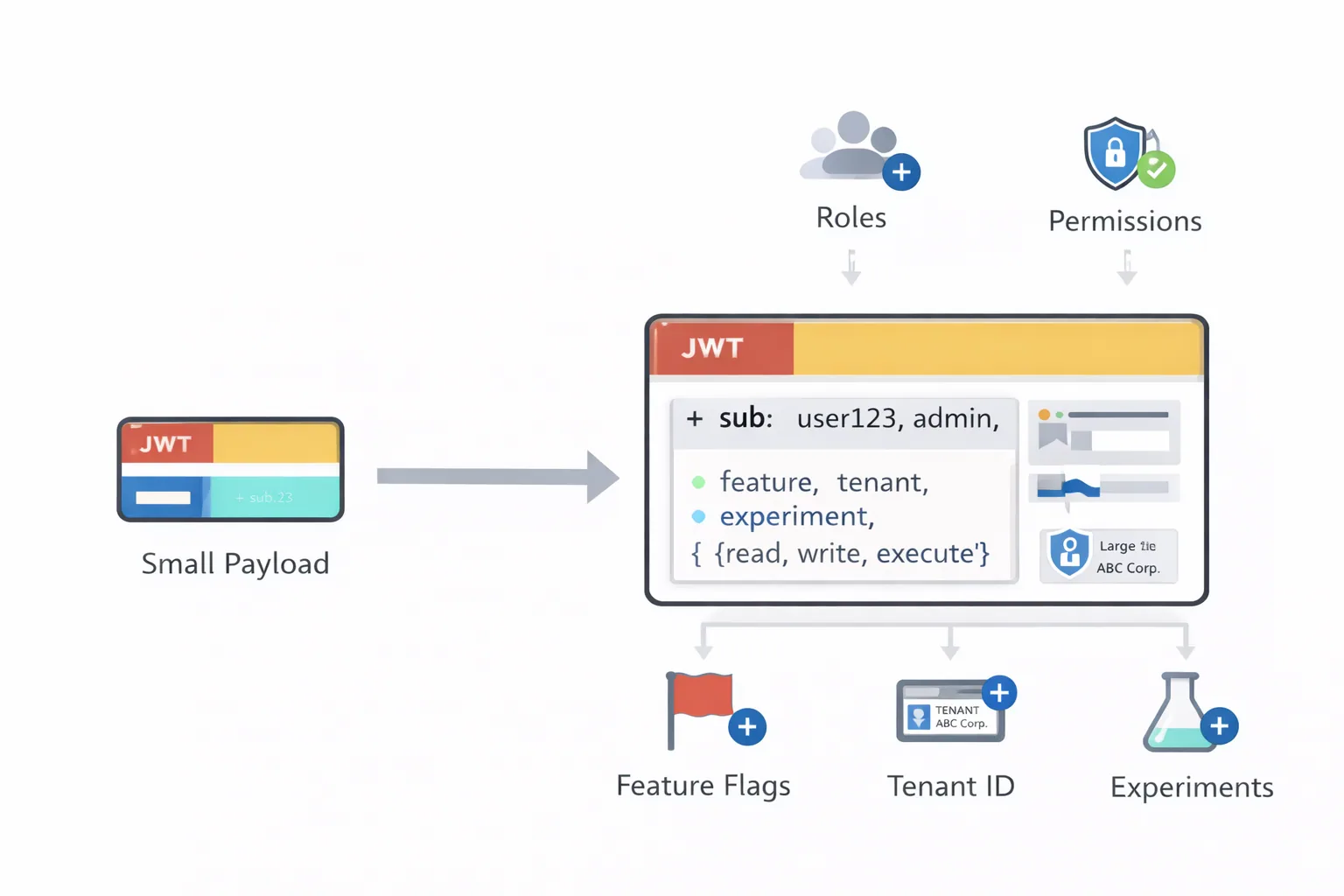
Then teams add:
- Roles
- Permissions
- Feature flags
- Tenant metadata
- Experiment assignments
Soon every request carries a large authorization header.
What Claims Bloat Looks Like in Production#
- Average JWT size grew from 900 bytes → 3.2 KB
- Network egress rose by 14 percent
- Heap allocations increased across all services
- GC pauses became more frequent under load
No single service looks broken. The entire system becomes heavier.
5. Clock Skew Breaks Assumptions#
JWT validation assumes synchronized clocks.
Distributed systems never have perfectly synchronized clocks.
Even with NTP:
- Small drift is inevitable
- Some nodes lag
- Others jump forward
Symptoms Seen in Production#
- Random 401 responses
- Requests fail only on specific pods
- Errors disappear after retries
- Impossible to reproduce locally
Metrics often show:
- 401 rate below 0.5 percent
- No obvious pattern
- No correlated deploys
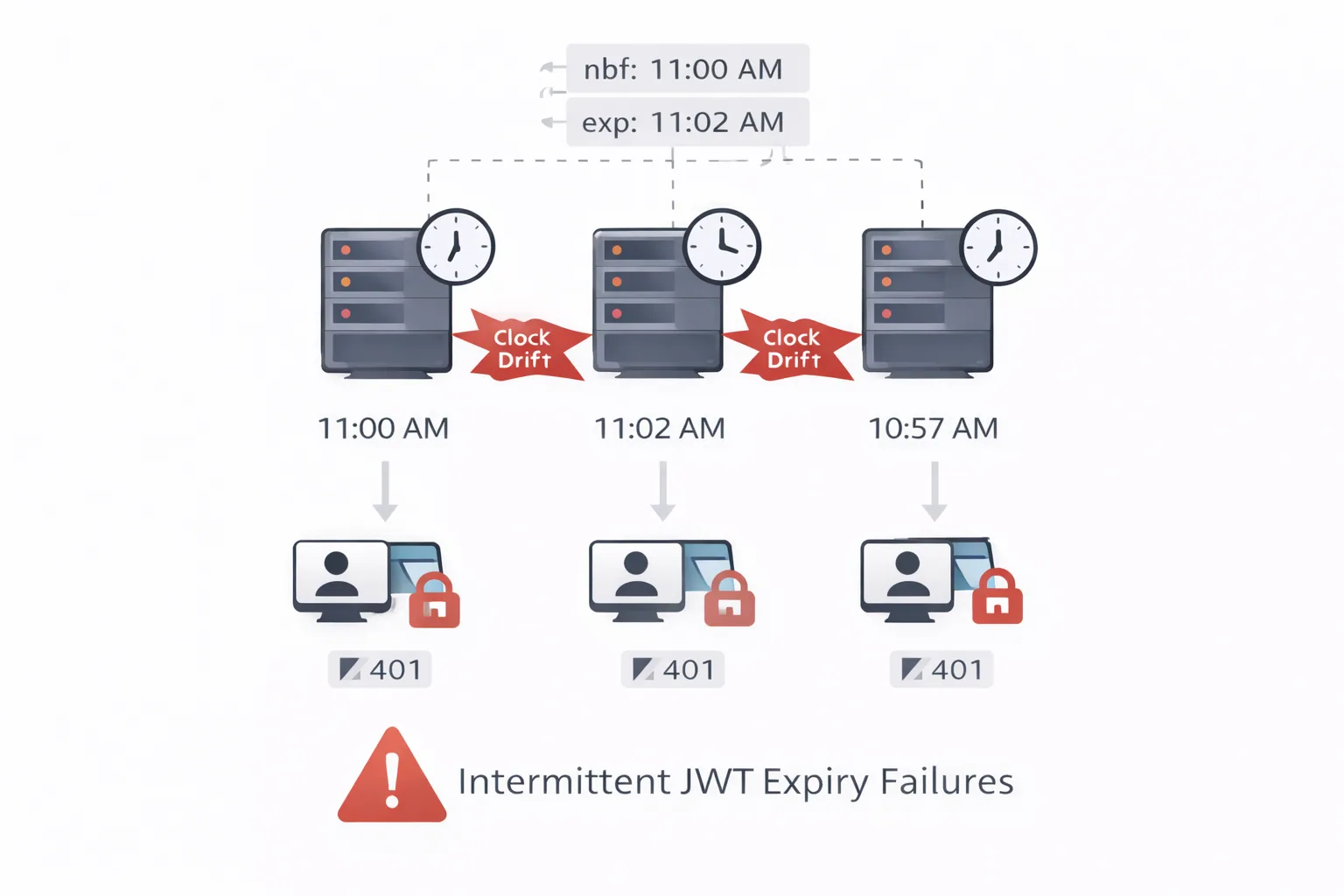
This is one of the hardest JWT issues to debug because it looks like user error.
6. JWTs Create an Observability Blind Spot#
JWT failures rarely show up as clean errors.
Instead, teams see:
- Slight latency increases
- Gradual CPU pressure
- Mild auth success degradation
- Elevated retry rates
No alert fires. No single dashboard looks alarming.
A Real SLO Example#
- Auth success SLO: 99.95 percent
- Gradual drop to 99.88 percent over weeks
- Latency SLO violated first
- Root cause traced back to JWT verification overhead after a claims expansion
JWTs fail quietly, not catastrophically.
The Core Problem#
JWTs optimize for statelessness, not operability.
They scale architecturally. They degrade operationally.
This is not a JWT bug. It is a design trade-off that becomes painful at scale.
How Mature Systems Actually Fix This#
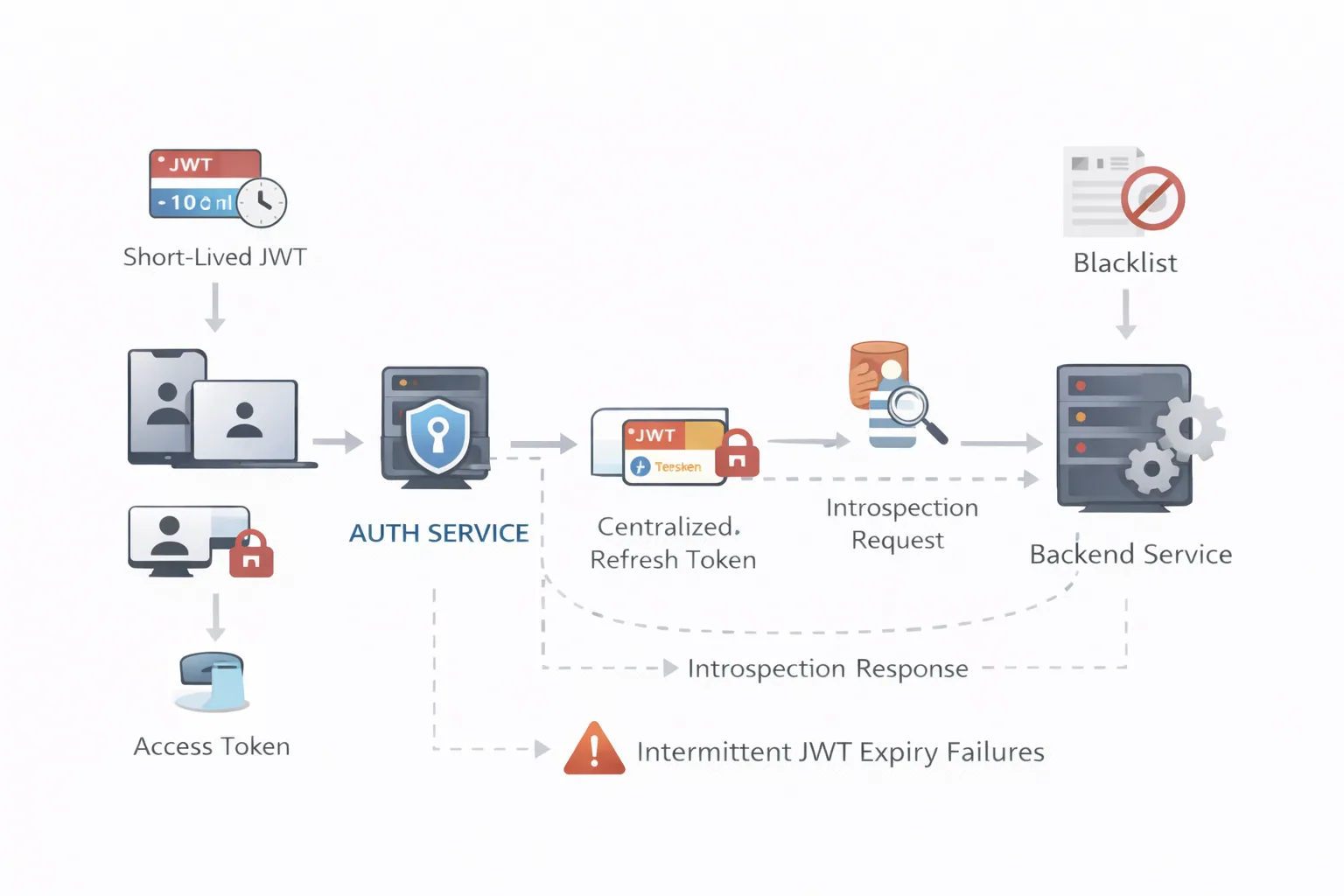
High-scale systems do not abandon JWTs. They constrain them aggressively.
Proven Production Patterns#
- Short-lived access tokens (5–15 minutes)
- Stateful, centralized refresh tokens
- Token revocation via blacklist or introspection
- Minimal JWT payloads
- Server-side permission evaluation
- Clock skew tolerance during validation
- Dedicated dashboards for auth latency and refresh rates
- Staggered token expiry to prevent refresh storms
The Short Truth#
JWTs rarely fail loudly.
They:
- Add invisible CPU cost
- Inflate network usage
- Weaken revocation guarantees
- Introduce subtle reliability issues
- Degrade SLOs over time
They do not crash your system. They rot it quietly.
Understanding this early is the difference between a system that merely scales and one that stays operable under real-world pressure.
Filed under authentication, jwt, scalability

Written by Dhananjay Aggarwal