Why Your Payment Happens Only Once Even When You Click Pay Multiple Times
The network drops, the user taps Pay again, and the money still moves once. How idempotency keys let a payment backend survive retries.
 Dhananjay Aggarwal, · 5 min read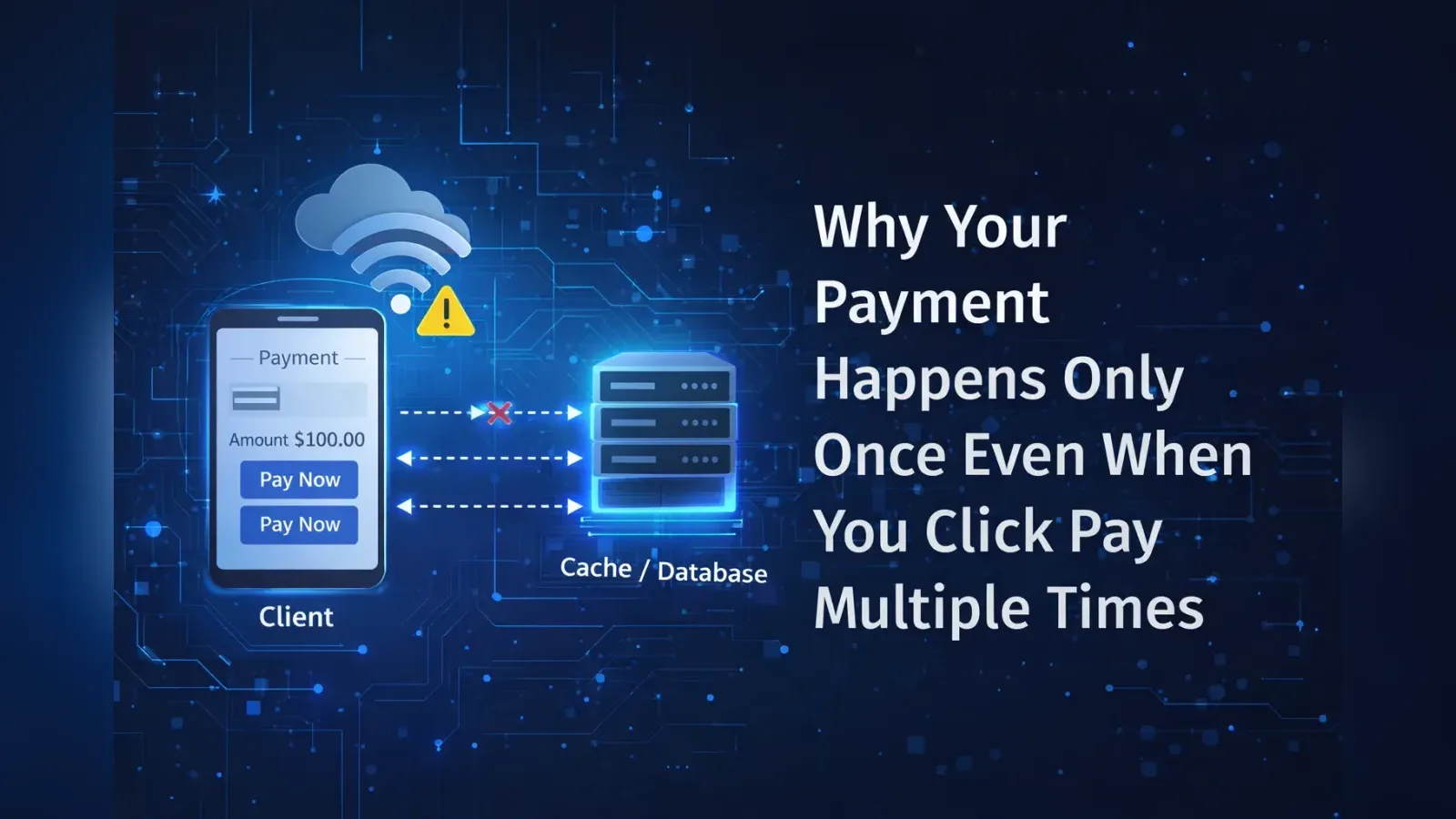
When you start a payment on a mobile app, the expectation is simple. Money should leave your bank account exactly once.
But reality is messy.
Networks fail. Mobile data drops. Apps freeze. Users panic. The payment button gets clicked again and again. Yet in most well-built systems, the transaction still happens only once.
This behavior is not accidental. It is the result of a deliberate system design principle known as idempotency.
This article breaks down how idempotency works in payment systems, why it is essential, and how backend systems enforce it under unreliable network conditions.
The Real-World Failure Scenario#
Consider a common flow:
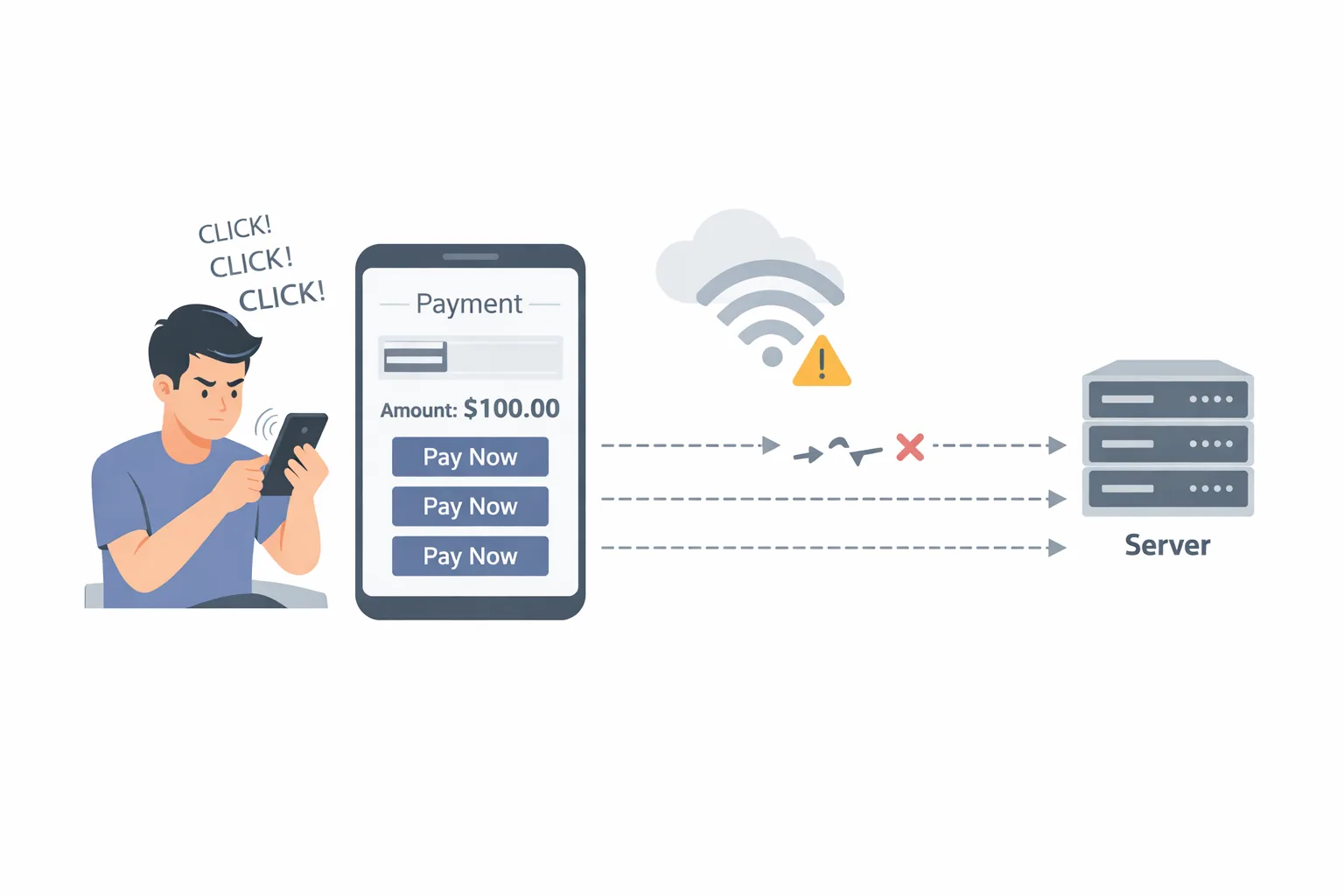
- A user starts a payment on a mobile app.
- The client sends a request to the backend.
- Before the response arrives, the user’s internet connection drops.
- The UI never receives confirmation.
- The user clicks the payment button again.
From the user’s perspective, nothing happened. From the backend’s perspective, the request may already be in flight or even completed.
Without safeguards, this scenario can easily end in duplicate charges.
Idempotency: The Core Guarantee#
Idempotency is a property of an operation where executing it multiple times produces the same result as executing it once.
In payment systems, this means:
- No matter how many times the same payment request is sent,
- The actual financial transaction is executed only once.
This guarantee is critical because payment operations are not naturally safe to retry. Money movement is irreversible and heavy with side effects.
The Role of the Client: Idempotency Keys#
Idempotency starts at the client.
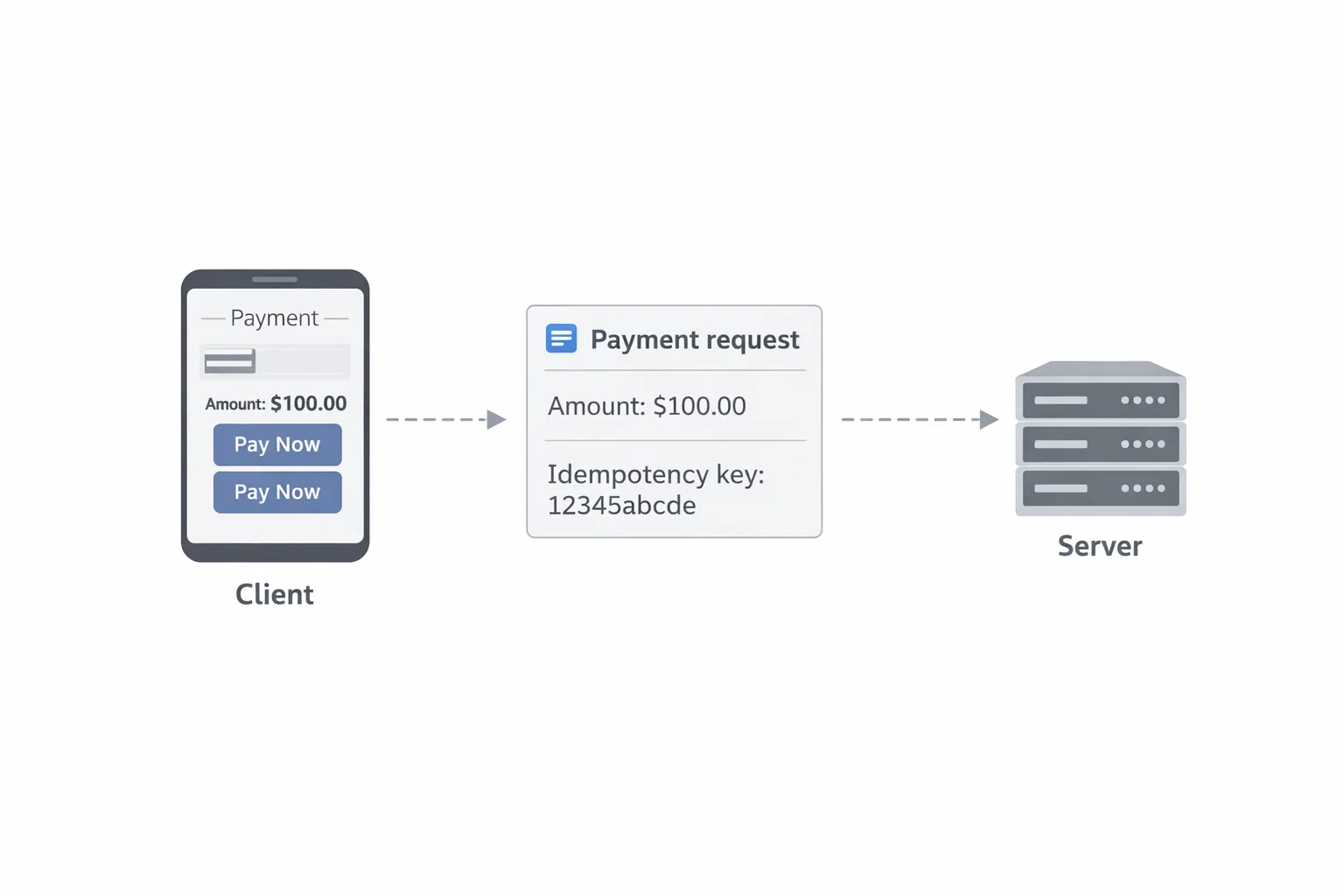
Every payment request sent to the backend carries an idempotency key.
Key characteristics:
- The key is unique per operation.
- It stays constant across retries of the same action.
- It represents the intent, not the request attempt.
If the user retries the same payment action, the client sends the same idempotency key again.
This is the only signal the backend has that multiple requests belong to the same logical operation.
Backend Enforcement: Single Execution Guarantee#
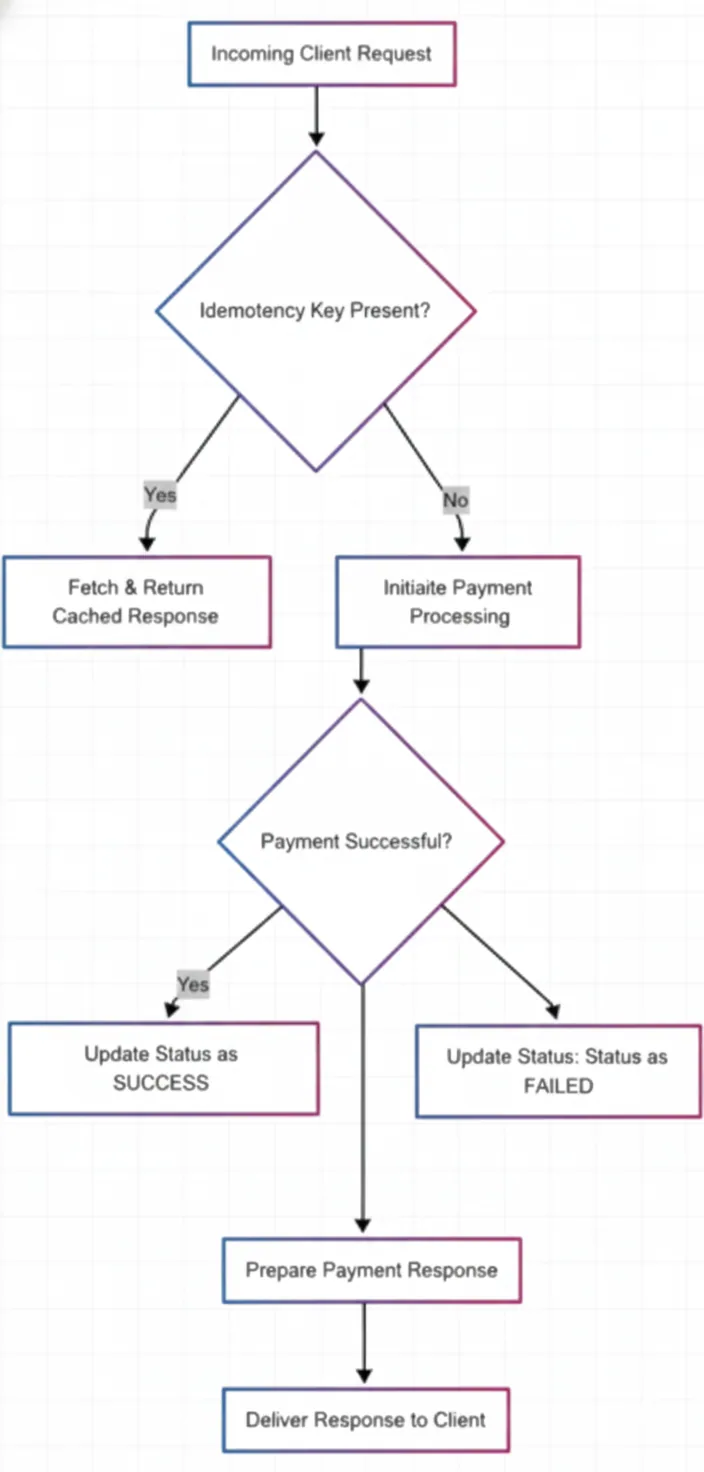
When the backend receives a payment request, the first step is not processing the payment.
The first step is idempotency validation.
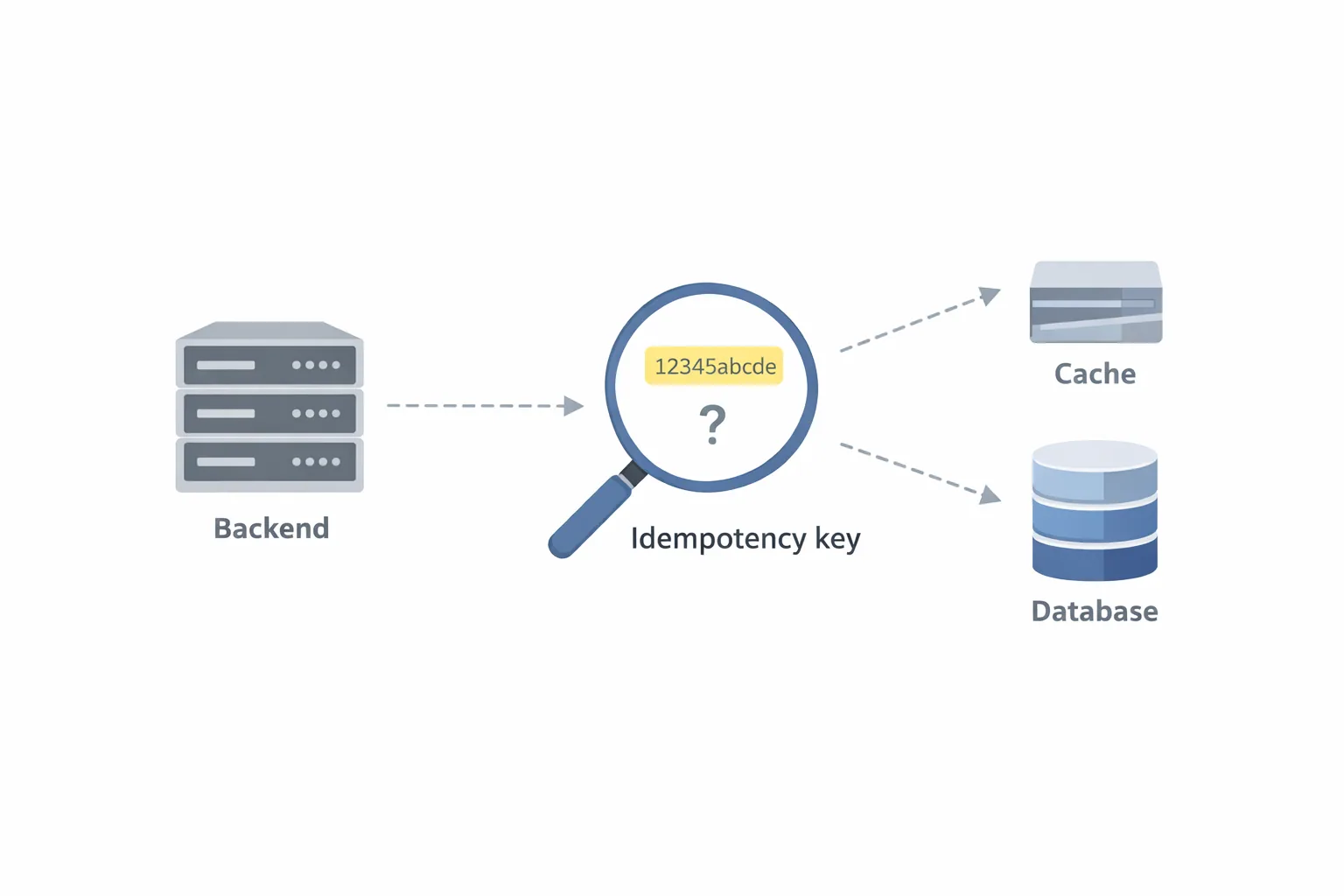
The backend checks whether the idempotency key already exists in its storage layer.
This storage can be:
- A database
- A cache
- Any durable system capable of atomic lookups and writes
The logic is straightforward but non-negotiable.
Case 1: Idempotency Key Does Not Exist#
- The backend goes ahead with payment processing.
- The transaction is executed exactly once.
- The result of the operation is stored against the idempotency key.
This stored result is the final outcome of the payment request.
Case 2: Idempotency Key Already Exists#
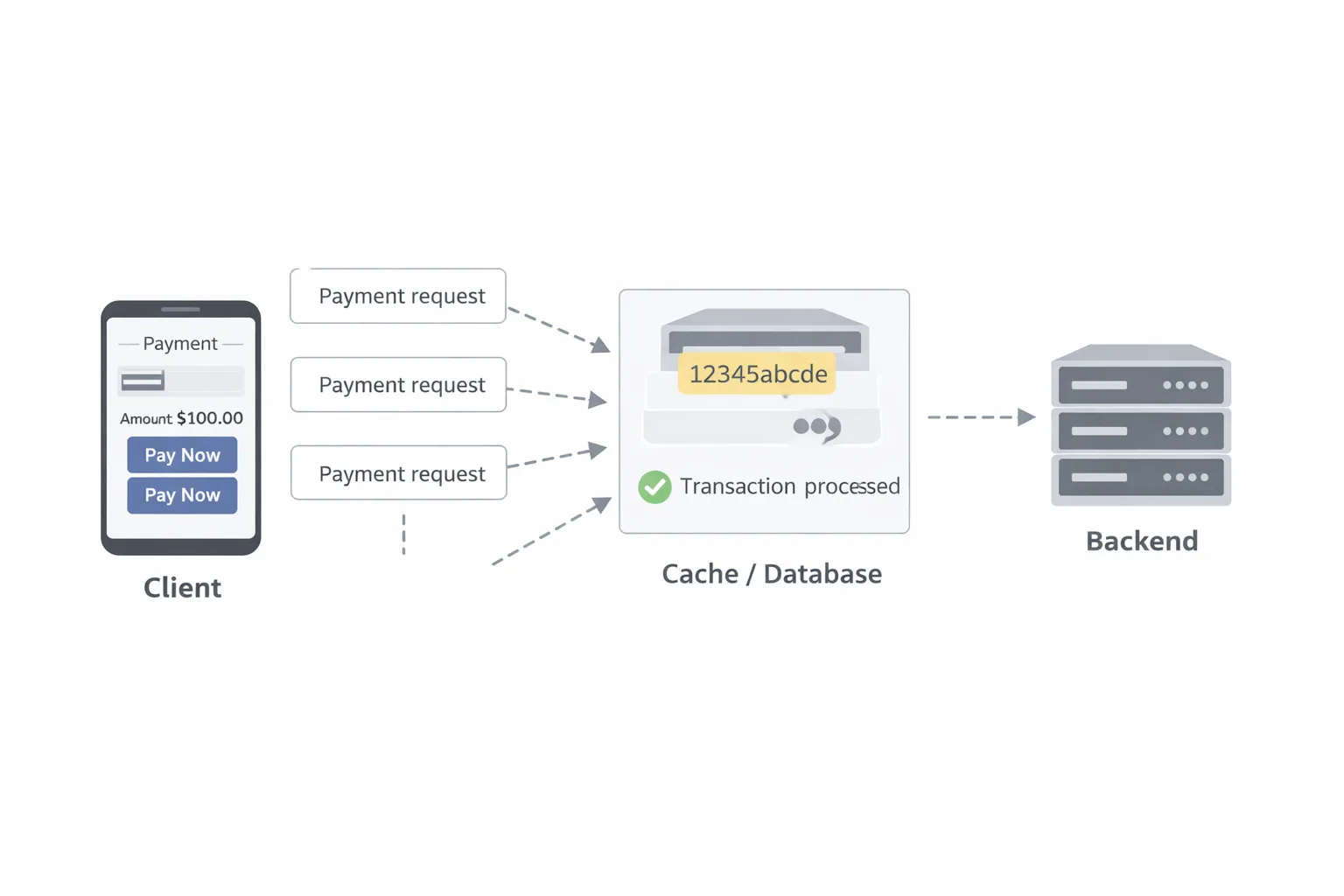
- The backend does not process the payment again.
- No duplicate transaction is triggered.
- The previously stored result is returned to the client.
From the client’s point of view, it looks like a successful retry. From the system’s point of view, no duplicate side effect occurs.
This is the core of idempotent behavior.
Why This Design Is Necessary#
Payment systems operate under real-world constraints:
- Unreliable mobile networks
- Client-side timeouts
- Duplicate HTTP requests
- User-triggered retries
You cannot prevent retries. You can only design systems that behave correctly when retries happen.
Idempotency ensures:
- Financial correctness
- User trust
- Operational safety
- Predictable backend behavior under failure
Without idempotency, retries become a liability instead of a recovery mechanism.
Key Takeaway#
Idempotency is not an optimization. It is a correctness requirement for any system that performs irreversible operations.
By attaching a unique idempotency key to each operation and enforcing strict backend checks, payment systems guarantee that:
- Multiple clicks
- Network crashes
- Client retries
do not result in multiple transactions.
The system processes intent, not attempts. That distinction is what keeps your money safe.
Filed under idempotency, payments, distributed-systems

Written by Dhananjay Aggarwal